Can Rice Skincare Help Fade Acne Marks?

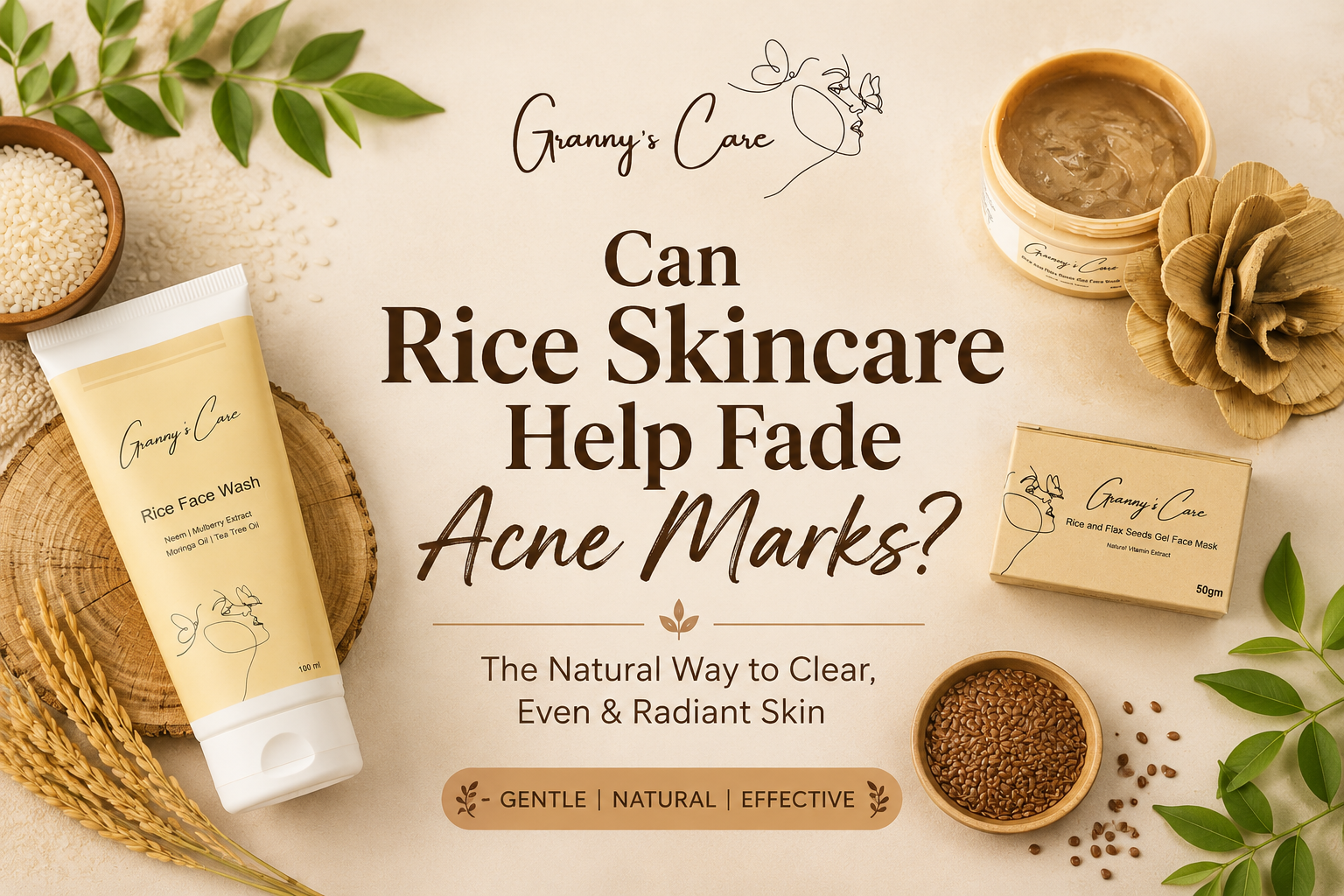
Rice skincare for acne marks has become a popular natural solution for people looking to fade stubborn post-acne spots. Let’s be honest about something first. If you’ve ever sat in front of a mirror, pressed a finger against an old acne spot, and silently begged it to just go away already, you’re not alone. Acne itself is annoying, but the marks it leaves behind? Those feel almost worse. They overstay their welcome. They show up in photos. And they make you reach for concealer on days you’d rather just wear your bare face.

So when people ask us whether rice skincare for acne marks can actually make a difference, we get it. You don’t want another miracle promise you want the truth. Here’s the honest version: yes, rice can help. But let’s talk about how, how much, and what it realistically can and can’t do. Because at Granny’s Care, we’d rather tell you the real story than sell you a fairy tale.

What Is Rice Skincare for Acne Marks and How Does It Help?

This part matters more than people think.

What most of us call “acne scars” are usually not scars at all. They’re marks  flat patches of discoloration left behind after a pimple heals. There are two common kinds: The brown or dark spots are what doctors call post-inflammatory hyperpigmentation. This is your skin going a little overboard with melanin while it heals. It’s extremely common on Indian and brown skin tones, and it’s the type that natural skin lightening products like rice can genuinely help with. The red or pink marks are a different thing  that’s leftover inflammation and tiny blood vessels showing through while the skin recovers. Both of these fade. Slowly, sometimes maddeningly slowly, but they fade.

What does not simply fade are true scars those little pitted dents in the skin (the ones people call icepick or boxcar scars). Those are changes in the skin’s actual texture, and no face pack on earth, ours included, is going to fill those in. That’s honest-shopkeeper talk. For deep textural scarring, you’d be looking at a dermatologist and treatments like microneedling or peels. So when we talk about rice helping, we’re talking about those flat brown and red marks  which, happily, are exactly what most people are dealing with.

Why our grandmothers were onto something with rice

If you grew up in an Indian household, there’s a decent chance you saw rice water being saved, not thrown out. Nani would rinse the rice, keep that cloudy water, and use it on her hair or skin. It wasn’t a trend. It was just… what you did. Turns out the science quietly agrees with her. This is exactly why natural products for skin have made such a strong comeback people are realising the simple stuff often works. Rice is rich in a handful of things that are genuinely useful for fading marks:

Ferulic acid and allantoin help calm down irritated skin and support healing. When your skin is less inflamed, marks settle faster and don’t linger as long.

Niacin and antioxidants gently interfere with that excess melanin production  the same melanin responsible for those stubborn dark spots. Over time, this helps the spots lighten, which is what makes rice such a gentle natural product for skin care routines.

Amino acids and vitamin E support your skin barrier, which is basically the foundation for skin that heals well and stays calm.

None of this is dramatic overnight magic. It’s the slow, steady, let-your-skin-do-its-job-better kind of help. Which, honestly, is what most skin actually needs.

Don’t sleep on flax seed either

While we’re talking grandmother wisdom, flax seed deserves a mention right next to rice. If you’ve never tried flax seed gel for face care, you’re missing out on one of the simplest, most underrated natural ingredients out there. Flax seed gel for skin is packed with omega-3s and a natural soothing quality that pairs beautifully with rice. Where rice works on tone and brightness, flax seed gel on face helps with hydration, calming redness, and that soft, bouncy feel your skin gets when it’s properly nourished. Using flax seed gel for skin alongside rice-based care gives your skin a fuller routine one targets the marks, the other keeps the skin barrier happy and healthy. It’s a good reminder that the best natural skincare products usually work together, not alone.

So how does rice skincare actually help fade the marks?

Think of it less like an eraser and more like a helping hand. Your skin already wants to fade those marks on its own. Rice-based skincare supports that process, calming inflammation, gently discouraging extra pigment, and keeping the skin healthy enough to recover properly. Used consistently, it can help the whole thing move along faster and look more even. This is why we built our range around exactly this idea  the Rice Face Wash for daily gentle cleansing, the Rice Radiance Face Pack for that weekly brightening boost, and our flaxseed face mask when your skin needs extra calm and hydration. The idea isn’t to shock your skin. It’s to feed it the kind of gentle, natural goodness it actually responds well to, the way Dadi and Nani always intended. And the convenience of buying online skin care products today means you don’t have to hunt through markets for these ingredients, you can get the natural products for skin you need delivered to your door.

The honest part nobody likes to hear

Here’s where we put on our serious face for a second. Rice skincare products help but it is not a substitute for the single most important thing you can do for acne marks: sunscreen. We’re not exaggerating. Sun exposure is the number one reason marks darken and stick around longer than they should. You can use the most beautiful rice face pack or the best natural skin lightening products every single day, but if you skip sunscreen, you’re basically filling a bucket with a hole in the bottom. Apply SPF every morning. That one habit will do more for your marks than almost anything else. The second honest thing: be patient. Real fading happens over weeks and months, not days. Anyone promising to erase your marks in a week is, well… let’s just say they’re not your grandmother.

A simple, realistic routine

If you want to give rice a fair shot, keep it gentle and consistent: In the morning, cleanse with a mild rice face wash, follow with a light moisturizer, and then  non-negotiable  sunscreen. Two or three times a week, treat your skin to a rice face pack, and on the days it needs soothing, reach for flax seed gel for face hydration. At night, cleanse off the day and moisturize. That’s it. No twelve-step madness. Just steady care with good natural skincare products. If your marks are very deep, very old, or genuinely textured rather than flat, please see a dermatologist. There’s no shame in that  sometimes skin needs a professional, and natural care works beautifully alongside that, not against it.

The bottom line

Can rice skincare help fade acne marks? Yes for the flat brown and red marks most of us actually have, rice is a gentle, time-tested helper that calms the skin, eases pigmentation, and supports your skin’s own healing. Pair it with flaxseed gel for skin, daily sunscreen, and a little patience, and you’ve got a genuinely effective, fully natural skin care product that nudges your skin toward looking clearer and more even.

It won’t perform miracles overnight, and it won’t fix true pitted scars. But sometimes the old wisdom really did know best. Rice happens to be one of those things our grandmothers got right long before science caught up.
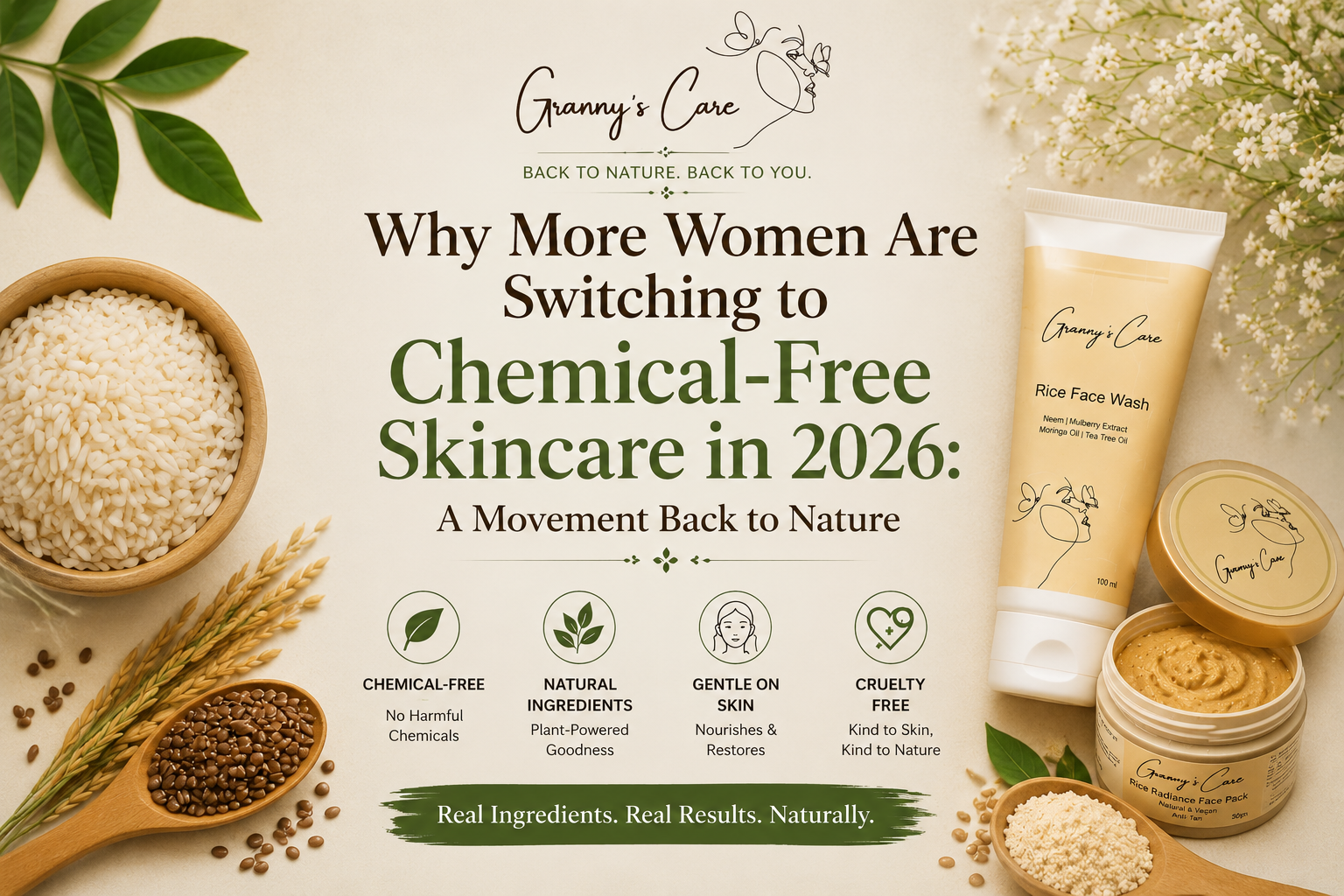
 

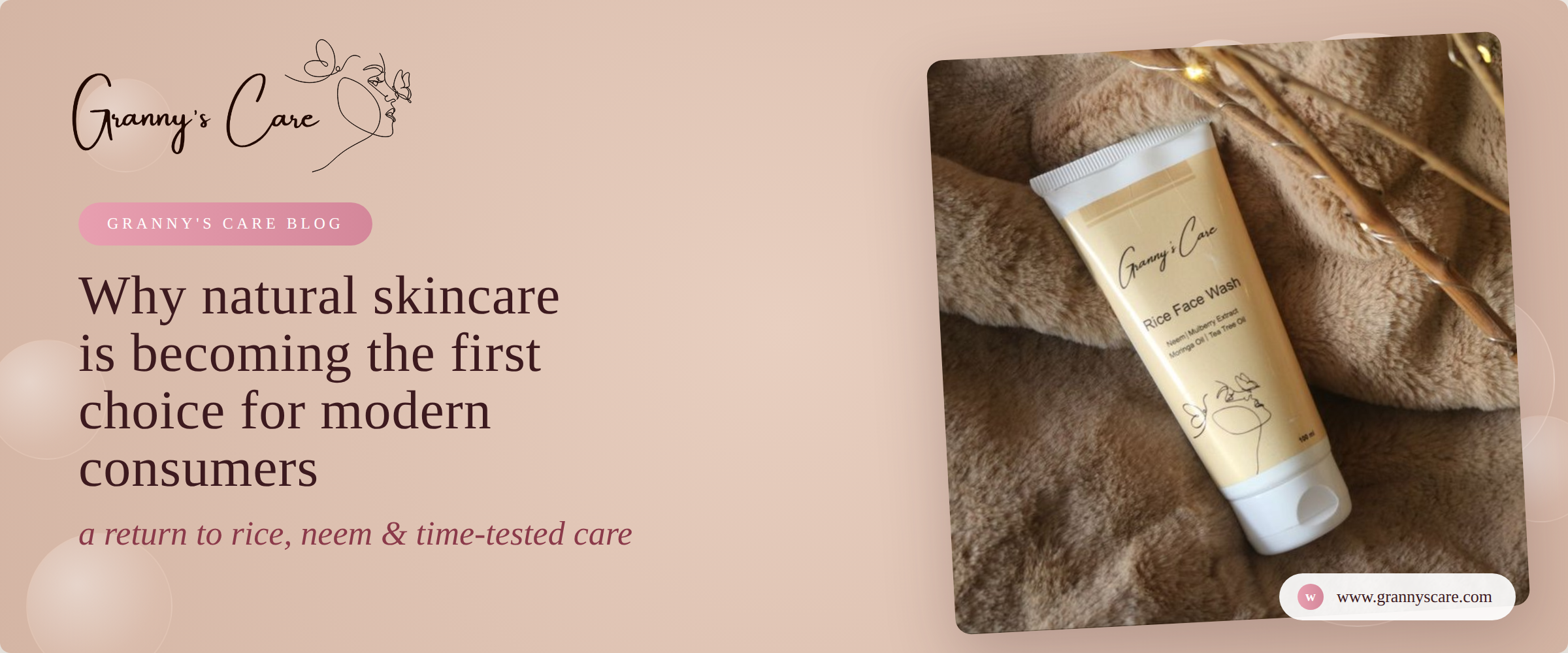
Why More Women Are Switching to Chemical-Free Skincare in 2026: A Movement Back to Nature

Chemical-free skincare is becoming the preferred choice for women in 2026. Remember when your grandmother made face packs from kitchen ingredients? She’d sit you down with rice flour, turmeric, and yogurt, talking about how generations of women in your family achieved glowing skin without anything from a fancy lab. Back then, we thought she was sweet but old-fashioned. We wanted the latest serums, scientific formulations, and products with names we couldn’t pronounce. We believed “chemical” meant “effective.”

But something has shifted, and it’s not a fleeting trend. In 2026, women everywhere are having their own “Dadi Maa moment.” They’re walking away from medicine cabinets full of synthetic products and back toward what actually works: natural skincare that treats their complexion with respect, not as a testing ground.

Why More Women Are Choosing Chemical-Free Skincare

Let’s be honest about why this is happening. It started small. One woman noticed her expensive moisturizer left her face tight and irritated. Another realized her sensitive skin finally calmed down after switching to gentler formulations. Then came the research, the studies, the group-chat conversations- all pointing to the same conclusion: much of what we’ve been putting on our faces has done more harm than good. The conventional industry was built on a promise: more ingredients equal better results. More actives, more preservatives, more lab-designed compounds. Some of it works. But at what cost? Women started asking harder questions. Why does my skin feel dependent on this product? Why do I break out if I stop for three days? Why am I spending so much on products that treat my skin like a condition rather than nourishing it?

The answers weren’t reassuring.

The Chemistry of Trust

What’s really happening is that women are getting smarter about what they put on their bodies. We research the ingredients in our coffee, our shampoo, our face creams. We read labels like ancient texts. And when we finally learn what “methylisothiazolinone” or “phenoxyethanol” actually are, we think: Do I really want this on my face for the next 20 years?

Increasingly, the answer is no. Natural skincare isn’t new your grandmother knew this. The difference is we now have the science to back up what she always understood. When you use natural products, you’re not just avoiding chemicals; you’re feeding your skin. Rice has brightened, refined pores, and gently exfoliated for thousands of years in Asian beauty rituals. Flax seed delivers omega-3s and lignans that reduce inflammation and support the skin barrier. These aren’t trends-they’re traditions backed by dermatology.

What’s Driving the Shift

Women switching in 2026 aren’t doing it for influencers. They’re doing it for real reasons.

They’re tired of the side-effect lottery. Harsh chemical products often feel like a grab bag of problems: sensitivity, dryness, dependency, irritation. A friend gets amazing results from a product; your skin reacts like you committed a crime. Natural skincare works with your skin’s biology, not against it gentler, and less likely to trigger inflammation.

The cost-benefit finally makes sense. Why pay $80 for a moisturizer that might irritate your skin when you can buy effective natural products for a fraction of the price? The old excuse “I can’t find good natural skincare” no longer holds. Dozens of brands, including Granny’s Care, now formulate specifically to deliver results without chemical side effects.

Transparency is non-negotiable. We read ingredient lists before we add anything to a cart. Natural skincare doesn’t require a chemistry degree. Rice flour. Flax seed. Turmeric. Honey. Your skin recognizes these because they’re food.

The Products Changing the Game

Take rice face wash. For decades we were told we needed stripping cleansers that left skin tight which we mistook for “clean.” Rice-based cleansers remove dirt and oil without stripping your protective barrier, leaving skin clean and moisturized.

Or flax seed gel, used in traditional Indian and Asian routines for centuries. Packed with antioxidants and omega-3s, it feeds your skin nutrients that support collagen and calm inflammation especially effective for acne-prone or reactive skin, without the heavy, suffocating feeling of chemical-heavy serums.

Then there’s rice flaxseed face mask, one of the most effective exfoliants available. It buffs away dead skin without the harshness of microbeads, brightening dull complexions and refining pores. And for sensitive skin, natural brightening products support even tone without bleaching or irritation.

Why 2026 Feels Different

We’ve had natural skincare movements before. The difference now is that it’s no longer fringe. Your mom is doing it. Your dermatologist is recommending it. The colleague who was always conventional is quietly mentioning the best skin she’s had in years. Part of it is accessibility you can buy genuinely natural skincare products online in seconds. Part of it is women reclaiming authority over their bodies. We’re no longer simply trusting “the science” of skincare corporations. We’re asking: whose science, funded by whom? And we’re rediscovering that the oldest wisdom passed down from grandmothers who understood skin long before synthetic ingredients existed actually holds up.

A Different Relationship With Your Skin

Here’s what nobody tells you: switching isn’t just about products. With conventional skincare, you’re constantly treating symptoms heavy moisturizer for dryness, harsh astringent for oil stuck in a cycle of over-correcting. With natural products, you stop fixing problems and start supporting health. Slowly, sometimes in just weeks, your skin begins regulating itself. That’s when you realize the problem was never your skin type it was your skin reacting to chemicals it didn’t recognize.

Where to Start

You don’t need to overhaul everything tomorrow. Start with one product a flax seed mask for acne or sensitivity, a rice flour pack for brightening, a rice face wash if your cleanser irritates you. Use it consistently for three weeks. Your skin might look slightly worse first the purging phase, where it sheds what it’s been holding onto. That’s healing. Then notice: Does your skin feel less reactive? Are you breaking out less? Does it look brighter? Can you go longer without makeup? Those are the signs you chose right.

Why Granny’s Care Leads

We didn’t invent chemical-free skincare our grandmothers did. We’ve simply honored that wisdom and made it accessible. Every product uses natural ingredients that work: rice that brightens and refines, flax seed that delivers real benefits without fillers or synthetics. When you buy from us, you’re buying generations of knowledge combined with modern quality standards. As 2026 deepens, this movement is only accelerating. More women are realizing the answer to beautiful skin was never in a lab it was always in their grandmother’s kitchen. And honestly? That feels like progress.

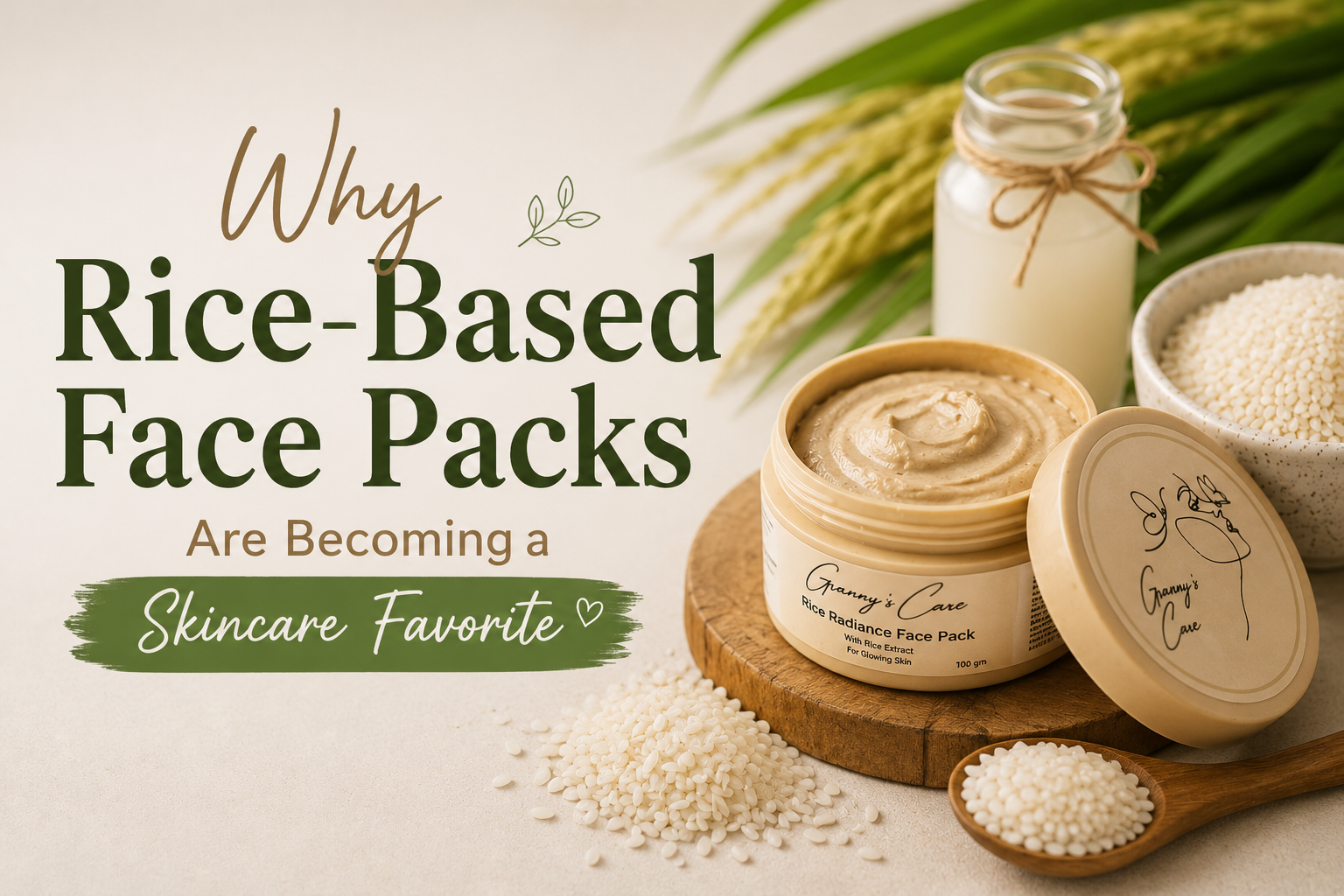
Why Rice-Based Face Packs Are Becoming a Skincare Favorite

Rice-Based Face Packs are becoming one of the most popular natural skincare solutions for people looking for healthy, glowing skin. From traditional beauty remedies to modern skincare products, rice-based face packs are gaining attention for their ability to brighten, soothe, and nourish the skin naturally. If someone had told me a few years ago that rice could become one of the most talked-about skincare ingredients, I probably would have laughed. Like most people, I thought rice belonged on a dinner plate, not in a beauty routine. But then I started noticing something interesting. From traditional home remedies to modern skincare products, rice seemed to be showing up everywhere. Friends with naturally glowing skin swore by it, beauty enthusiasts couldn’t stop talking about it, and even skincare brands were beginning to highlight rice as a key ingredient. The truth is, rice isn’t a discovery. For generations, people have used rice-based treatments as part of their beauty rituals. What feels like a modern trend today is actually a time-tested skincare secret that has been passed down through families for years.

So why is rice making such a big comeback in the beauty world? And what makes a Rice Radiance Face Pack so popular among people looking for healthy, glowing skin? Let’s take a closer look.

Why Rice-Based Face Packs Are Making a Comeback

Rice in beauty isn’t some shiny new invention. Women across Asia have leaned on it for centuries, soaking it, grinding it, using the leftover water as a toner. They figured out something powerful ages ago, and we’re only now catching up. What’s changed is that natural skincare brands are finally bottling that old wisdom into modern products. So instead of grinding rice in your kitchen (though you absolutely can), you’ve got ready-made options. The appeal is obvious: it’s simple, it’s gentle, and it actually does something. In a market crammed with overcomplicated formulas, that kind of honesty stands out.

Benefits of Rice-Based Face Packs for Healthy Skin

Here’s the part that won me over. Rice is packed with vitamins, antioxidants, and natural compounds that brighten and soften without being harsh about it. That gentle quality matters more than people realize. A lot of natural skin lightening products on the market are aggressive, full of stuff that fades dark spots but leaves your skin angry in the process. Rice takes the slow, kind route. It brightens gradually and evenly, which is exactly what you want. This is also why a rice flour face pack works so well for folks with reactive skin. If you’ve spent years searching for face products for sensitive skin that don’t betray you halfway through the week, rice might be your new best friend. It’s one of the better natural face products for sensitive skin precisely because it soothes instead of stripping.

More than just a mask

The face pack tends to get the spotlight, but rice shows up in plenty of other places too. A good rice face wash, for example, cleans your skin without that tight, squeaky-clean feeling that actually means you’ve stripped away too much. It leaves you soft and fresh instead. Pair a daily rice face wash with a weekly rice flour face pack and you’ve basically got a mini routine built around one humble ingredient. Simple, affordable, effective. What’s not to like. That simplicity is a big reason rice-based products fit so neatly into the world of all natural skincare products. No mystery chemicals, nothing you can’t pronounce, just skin care products natural ingredients doing their job.

It plays well with others

One thing I love is that rice doesn’t demand to be the only star. It pairs beautifully with other natural products for skin. Flax seed is a favorite partner of mine. Smoothing a little flax seed gel on face skin after a rice mask adds a layer of light hydration that makes everything feel plump and bouncy. Some people even alternate between a rice flour face pack and a flax seed face mask through the week, letting each one do its thing. Together they cover brightening and hydration without a single harsh ingredient between them.

This is the beauty of natural and organic skin care products. They’re designed to work with your skin and with each other, not fight for attention.

You don’t need a huge budget

Let’s clear up a tired myth: clean beauty being only for people with money to burn. Not true, and rice is proof. Rice-based options are some of the most affordable skin care products you’ll find. The ingredient itself is cheap and abundant, so you’re not paying a premium for a fancy name. You can buy skin care products built around rice without flinching at the price tag, which is honestly refreshing. And these days you don’t even have to leave the house. A quick browse through online skin care products will pull up loads of rice-based picks. Just do what I always nag people to do, read the ingredient list first and lean toward brands that are upfront about what’s inside.

A gentler way to glow

What really keeps rice in my routine is how it fits the bigger picture. Choosing natural body care products and natural skincare products isn’t only about chasing that glow. It’s about a routine that feels cleaner and more intentional. Rice slots right into that mindset. It’s gentle enough for natural skin care products for sensitive skin, effective enough to stand beside professional skin care products, and simple enough that you actually understand what you’re using. That combination is rare.

Worth a spot in your routine

This isn’t a trend that’ll vanish by next season. Rice in skincare is an old habit getting a well-deserved second life, and the reasons hold up, gentle brightening, soft hydration, and a kindness to sensitive skin that the harsh stuff never manages. Curious enough to test it? Grab a rice flour face pack and try it for a few weeks. Throw in a flax seed face mask or a daily rice face wash if you want, and just pay attention to how your skin feels. You might be surprised how much that little kitchen staple can do once it moves from your dinner plate to your face.


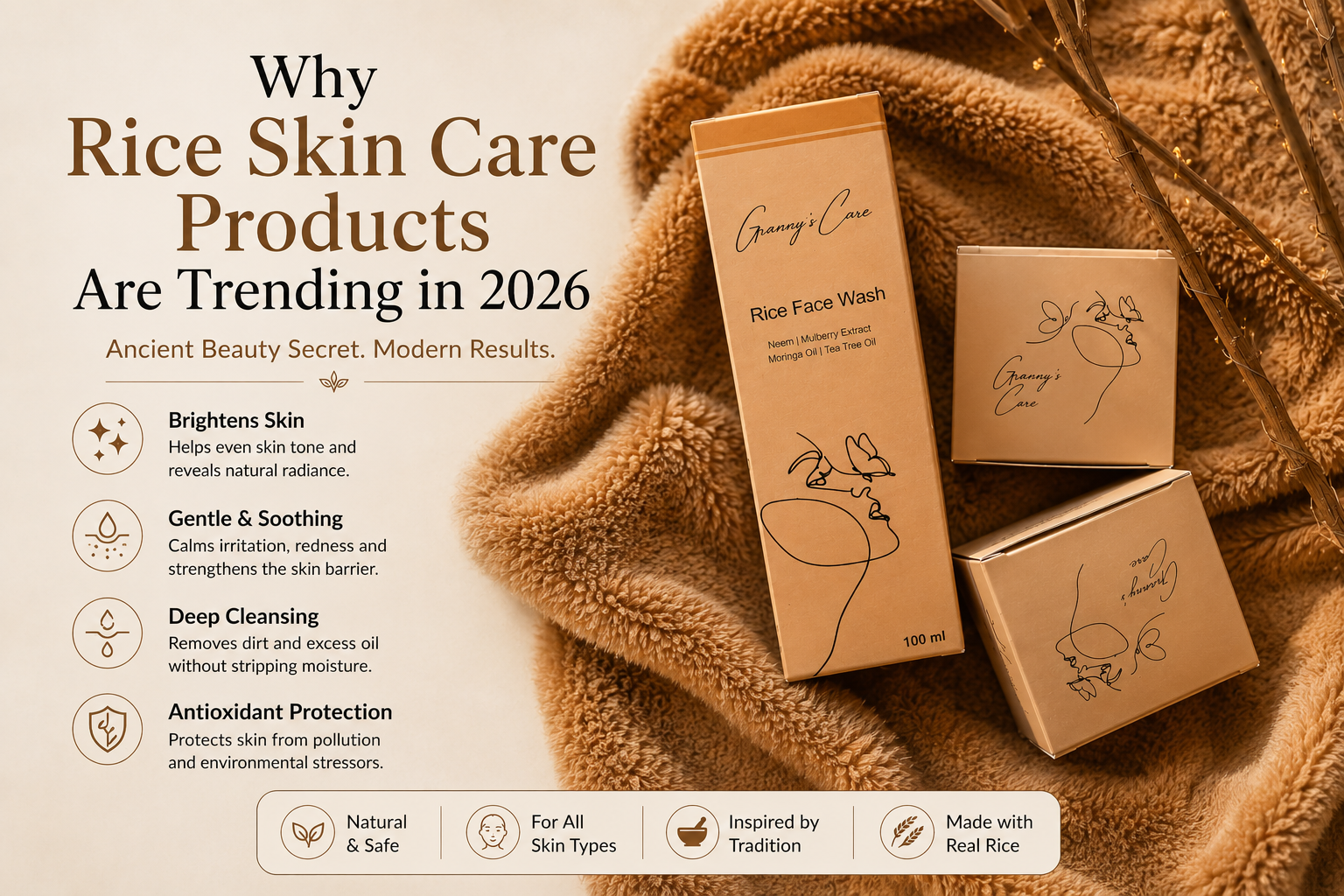
Why Rice Skin Care Products Are Trending in 2026

Rice skin care products are becoming one of the biggest skincare trends of 2026, and honestly, it is not hard to see why. God put rice on this earth, and somehow we spent decades eating it but forgetting to put it on our faces. The women in Japan, Korea, and across rural India who were known for their naturally clear, smooth skin were not using complicated ten-step routines or chemical-heavy products. They were using rice. Rice water splashed onto the face after cooking. Rice flour mixed with milk and gently massaged into the skin before rinsing off. No fancy branding. No expensive serums. Just simple rice-based skincare used consistently because it worked.

And in 2026, people are finally paying attention again. About time, honestly. Walk into any beauty store right now, and rice is on half the labels. Open any skincare video, and someone is talking about rice water, rice flour, rice extract. But I want to be clear about something that is not the same as the snail mucin moment or the cactus water phase everyone forgot six months later. Rice is not trending because a brand decided to make it trend. It is trending because people tried it, saw results, told their friends, and those friends tried it too. Word of mouth across decades. That is a very different thing. So why is rice having this moment right now? And more importantly, is it actually worth the attention it is getting?

Yes. And I’ll tell you exactly why.

Rice Has Been a Skincare Secret for Centuries – We Just Forgot

Go back far enough in almost any Asian household, and you will find some version of this: women saving the water from washed or boiled rice and using it on their skin. In Japan, it was called Yu-Su-Ru. In Korea, rice water was used to wash the face and hair as part of the daily routine. In South India, rice flour pastes were applied as skin-brightening treatments. These were not beauty rituals built on trends. They were built on results. Passed from mother to daughter, repeated daily, trusted completely because they worked.

What we know now, through modern research, is why they worked. Rice contains ferulic acid, a powerful antioxidant that protects skin from UV-related damage and environmental stress. It has natural starches that soothe inflammation and redness. It contains allantoin, which helps skin heal and regenerate. And it has niacinamide, the same ingredient that premium brightening serums are charging enormous amounts for, occurring naturally, in useful concentrations. Your great-grandmother did not know the word niacinamide. But she knew her skin looked better when she used rice on it. Same result. Less fuss.

So Why Is 2026 Specifically the Year Everyone Is Talking About This?

A few things have shifted in the past couple of years that explain the timing. People are tired of complicated routines. The multi-step, multi-active, heavily chemical approach to skincare peaked and then crashed because for a large portion of people, it just did not work the way it was supposed to. Sensitive skin got more sensitive. Barrier damage became a real conversation. People started asking whether ten products was actually better than two good ones.

At the same time, there has been a real and growing interest in ingredients with heritage. Not heritage as a marketing story  but ingredients that have been genuinely tested across generations and cultures. Rice fits this perfectly. It is not new. It has not been manufactured in a lab. It has just been sitting there, being reliable, for thousands of years. And then there is the skin-barrier conversation. 2024 and 2025 were the years “barrier repair” became mainstream skincare vocabulary. Once people understood what a damaged skin barrier actually meant dryness, sensitivity, breakouts, redness they started looking for ingredients that strengthen rather than strip. Rice does exactly that.

Natural product for skin care that genuinely nourishes is what people are searching for now. And rice keeps coming up as the answer.

What Rice Actually Does for Your Skin – Specifically

Let me be practical here because “rice is good for skin” is too vague to be useful.

Brightening without bleaching. Rice contains compounds that inhibit tyrosinase  the enzyme involved in melanin overproduction — in a gentle, natural way. This means it helps fade dark spots, even out skin tone, and bring out natural radiance without the harsh side effects of chemical skin lightening agents. These are natural skin lightening products in the real sense. No skin thinning, no rebound darkening, no risk.

Deep but gentle cleansing. The natural starches in rice absorb excess oil and impurities without stripping the skin’s moisture barrier. A rice face wash leaves skin clean but not that uncomfortable tight feeling that harsh sulphate-based cleansers create. For people with combination or oily skin, this matters a lot.

Soothing for reactive skin. Allantoin and the natural anti-inflammatory compounds in rice calm redness, reduce puffiness, and help irritated skin settle. This is why rice-based products keep appearing on lists for natural skin care products for sensitive skin  they genuinely behave well on reactive skin types.

Exfoliation without damage. A rice flour face pack used once or twice a week physically removes dead skin cells  but the particle size and texture of rice flour is much finer and less aggressive than walnut shells or apricot kernels that have been linked to microscopic skin damage. You get the brightness of exfoliation without the irritation.

Antioxidant protection. Ferulic acid in rice is a serious antioxidant. It neutralises free radicals from sun exposure and pollution — exactly the kind of daily environmental stress that causes premature ageing. Using rice skin care products regularly means your skin has a layer of daily protection it was not getting from many chemical alternatives.

The Rice Face Wash – Why It Deserves a Permanent Spot in Your Routine

A lot of people underestimate the face wash. They spend money on serums and masks and then use whatever cheap foaming cleanser was on sale for the step that actually sets the tone for everything else. Your face wash matters. It is the first thing that touches your skin in the morning and the last thing at night. If it strips your barrier, everything you apply after has to work twice as hard. Our Rice Face Wash at Granny’s Care was formulated around this understanding. Rice water as the base, no sulphates, no artificial fragrance. It removes dirt, excess oil, and environmental residue without destroying the natural oils your skin needs to function. It respects your skin’s pH. It leaves a calm, clean base for whatever comes next. For people who have been struggling with face products for sensitive skin going through product after product, dealing with redness and dryness from cleansers -this is often the change that finally settles things. Clean, gentle, consistent. That is all most skin actually needs from a face wash.

Rice Flour Face Pack – What It Does That a Scrub Cannot

Physical scrubs have had a bad few years, and for good reason. A lot of them  the ones with crushed walnut shells or harsh granules  cause tiny tears in the skin surface that you cannot see but that accumulate over time as inflammation and sensitivity.A rice flour face pack is different. The texture is finer. The exfoliation is more like polishing than scrubbing. It removes dead skin buildup, yes, but gently – without the aggressive friction that damages the skin barrier.Use it once or twice a week. Mix rice flour with a little raw milk or rose water, apply evenly, leave for fifteen minutes, rinse with lukewarm water. Your skin will look noticeably brighter and feel smoother. Not because you forced it – because you cleared away what was sitting on top and let your actual skin show.

This is what natural products for skin were always supposed to do. Reveal. Not override.

Who Should Be Using Rice Skincare Products in 2026?

Honestly? Most people.

If you have oily or combination skin, rice-based cleansing and exfoliation helps manage oil without stripping. If you have dry or sensitive skin, the soothing and barrier-strengthening properties of rice are genuinely helpful. If you are dealing with dull or uneven skin tone, the brightening compounds in rice work gradually but reliably. If you want to simplify a complicated routine without losing results, rice is one of those ingredients that does multiple things well. The only person for whom rice skincare might not be the priority is someone with a very specific dermatological condition being managed with prescription products. For everyone else, this works.

It is also worth saying: rice-based products are some of the most affordable skin care products available. You can buy skin care products with rice as a hero ingredient without spending a lot. Our range at Granny’s Care is priced for daily use, because we believe that all-natural skincare products should be accessible to everyone who wants them not just people with premium beauty budgets.

How Granny’s Care Uses Rice – and Why We Are Proud of It

We did not add rice to our products because it was trending. We used rice because our grandmothers used rice, and because when we looked at what the ingredient actually does, it made complete sense for the kind of brand we wanted to be.

Our rice face wash and rice flour face pack are made with real rice-derived ingredients. No synthetic substitutes, no watered-down versions for cost-cutting. When you use our products, you are getting the same thing your Nani Maa was using, just formulated for consistent, daily use in a modern routine.

We are one of the natural skincare brands that still believe the best ingredients are the ones that have been trusted for generations. Not because it makes a good story. Because it is true.

A Simple Rice Skincare Routine to Start With

You do not need to overhaul everything. Start here:

Morning — Cleanse with the Rice Face Wash. Pat dry. Follow with a light moisturiser. That is enough.

Evening — Cleanse again with the Rice Face Wash to remove the day’s pollution and product buildup. If your skin feels dull, apply a little rice water (just soak raw rice in water for 30 minutes, strain, and use the water) as a toner before moisturising.

Twice a week — Use the Rice Flour Face Pack as a mask or gentle exfoliant. Leave for fifteen minutes. Rinse with cool water.

Give it four weeks. Seriously, just four weeks of this simple routine. The brightness and evenness you will see in your skin at the end of those four weeks will tell you everything you need to know about why rice has survived as a skincare ingredient across centuries and cultures.

Final Thought

Trends come and go in the beauty world faster than most of us can keep up. But rice is not a trend in that sense. It is a return. A return to something that was always there  reliable, gentle, effective waiting for people to stop chasing complexity and come back to what actually works.

In 2026, a lot of people are making that return. And their skin is showing it. If you want to explore our full range of natural and organic skin care products built around rice, flaxseed, and other time-tested ingredients, we would love to show you what we have made.


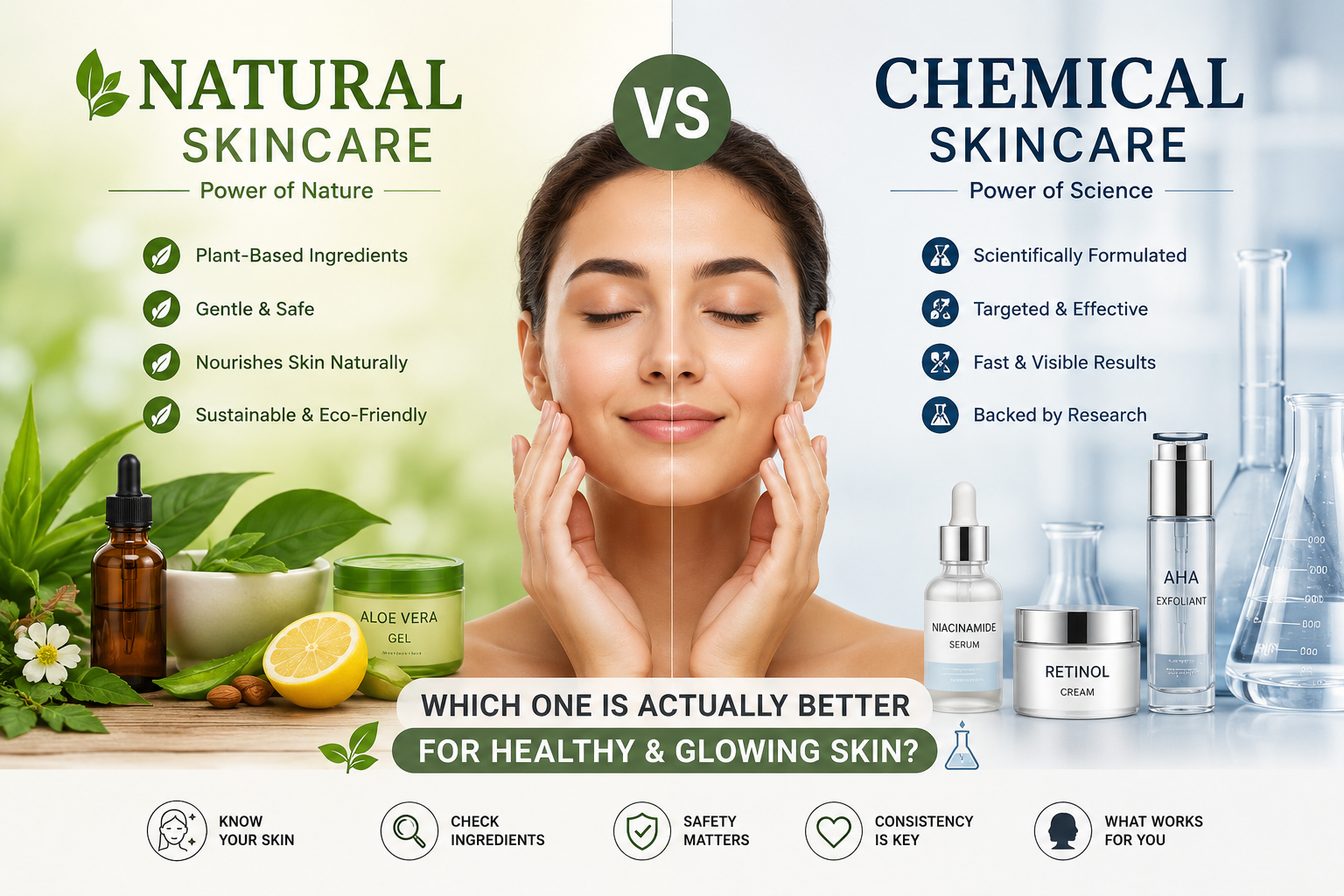
Natural Skincare vs Chemical Skincare: Which One Is Actually Better for Healthy & Glowing Skin?

Natural skincare vs chemical skincare is one of the biggest debates in beauty today. God made this skin for us. Think about that for a second. He gave us the largest organ in our body and filled the earth with everything needed to care for it: rice, turmeric, flaxseed, neem, and sandalwood. All of it is already here, already perfect, long before a single laboratory was ever built. And yet somehow we ended up with a 12-step chemical routine that costs five thousand rupees a month and still leaves half of us with irritated, confused skin.

I find that a little strange, honestly.

This is not a blog that is going to tell you that all chemical products are poison or that you should throw everything out today. But I do want to talk plainly about what natural skincare actually does, what chemical skincare actually does, and why so many people who spent years chasing clinical actives are quietly coming back to natural and organic skin care products and wondering why they ever left. Because the answer, most of the time, was already in your grandmother’s kitchen.

What “Natural Skincare” Actually Means

Not the marketing version. The real one.

Natural skincare means products made from ingredients that come from the earth  plants, seeds, grains, roots, clays. Things like rice flour, flaxseed, neem, aloe, turmeric. Ingredients that your grandmother recognised by sight and your great-grandmother grew in her backyard. All natural skincare products in the truest sense contain no synthetic preservatives, no petroleum-derived fillers, no lab-made fragrance. The formula works with your skin not on it.

Here at Granny’s Care, this is exactly the standard we hold ourselves to. When we formulated our rice face wash or our flax seed face mask, we started with the same question our Dadi Maa would have asked: what does skin actually need? The answer was never a ten-syllable chemical. It was rice. It was flaxseed. It was things people have trusted for a very long time because they genuinely work.

What Chemical Skincare Actually Means

Lab-made ingredients. Some of them are clever. Some genuinely effective.

Retinoids, AHAs, BHAs, synthetic brightening agents, sulphate-based cleansers, paraben preservatives these are the building blocks of most conventional skincare. And the reason they sell so well is simple: they show results fast. A chemical peel makes your skin look smooth almost immediately. A bleaching agent lightens a dark spot in days. A retinoid speeds up cell turnover and your skin looks newer, fresher, quickly. But here is the part that does not make it into the marketing campaign what happens when your skin pays the price for all that speed.

Sulphates strip the natural oils from your skin, so your face feels tight and dry after washing. Synthetic fragrances are among the most common causes of skin sensitivity and allergic reactions. Retinoids can cause purging, peeling, redness, and increased sun sensitivity. Bleaching agents work by suppressing melanin the same pigment that protects your skin from UV damage. Many chemical preservatives have been linked to hormonal disruption with long-term use. And perhaps the most frustrating part  a lot of people end up needing more products to manage the side effects of the products they are already using. One serum causes dryness, so you add a heavy moisturiser. That moisturiser clogs pores, so you add a chemical exfoliant. It just keeps going. Natural product for skin care does not do this. It does not create problems it then needs to fix.

The Sensitive Skin Problem

This section is for the people who have tried everything and watched their skin rebel every single time. Sensitive skin is not rare. A huge number of people have skin that reacts badly to synthetic fragrances, alcohol, sulphates, and strong chemical actives. And yet the average drugstore shelf is full of products with all of those things in them. Natural skin care products for sensitive skin work differently because the ingredients themselves are gentler at a biological level. Rice water does not strip. Flaxseed does not irritate. Plant oils do not trigger the kind of inflammation that synthetic compounds often do.

Our Rice Face Wash was specifically designed with sensitive and reactive skin in mind. Rice water has been used across South and East Asia for centuries  it contains inositol, amino acids, and B vitamins that actually help repair the skin barrier rather than compromise it. If you have been using face products for sensitive skin and still struggling, this is worth trying. Clean without that tight, stripped feeling. Calm without being ineffective.

Flaxseed and What It Does That Expensive Serums Claim To

Can we give flaxseed a proper moment here? When flaxseeds are soaked in water, they release a thick natural gel. This flax seed gel for skin is rich in omega-3 fatty acids, lignans, and antioxidants. And what it does for skin is genuinely impressive  it reduces inflammation, improves elasticity, deeply hydrates dry or dull skin, and helps with that overall plumpness that we all want but usually have to pay a lot of money to get from a bottle.

Using flax seed gel for face regularly is one of the simplest upgrades you can make to any skincare routine. It absorbs well, sits lightly, and over time gives you the kind of skin that people ask you about. Applying flax seed gel on face two or three times a week as a mask or overnight treatment  makes a noticeable difference in texture and hydration levels. Our Flax Seed Face Mask is built around this. It is one of our best-selling natural skincare products, and the reason people keep reordering it is simple  they can feel the results. Softer, more nourished skin. No parabens, no synthetics. Just flaxseed doing what flaxseed has always done.

Rice in Skincare – Not a Trend, Just a Very Old Truth

Japanese, Korean, Chinese, South Asian across all these skincare traditions, rice keeps showing up. It is not a coincidence. Rice is loaded with ferulic acid, which protects skin from environmental stress. It contains natural starches that soothe irritated skin. And it has niacinamide the same ingredient that high-end brightening serums charge a premium for occurring naturally.

A rice face wash cleanses thoroughly without destroying the moisture barrier. A rice flour face pack exfoliates gently without causing the microtears that physical scrubs sometimes leave behind. And rice-based products are some of the most trustworthy natural skin lightening products you can find they brighten by improving the skin’s actual health, not by chemically blocking melanin. Our Rice Radiance Face Pack uses real rice flour alongside traditionally trusted herbs. It is what skin care products natural ingredients are meant to be  simple, effective, and kind to the skin that wears them. These are the kind of rice skin care products that deserve a permanent place in your bathroom.

Things People Believe About Natural Skincare That Are Just Not Accurate

Natural products don’t actually work.

They do. The difference is that chemical products often force a quick result strip, bleach, accelerate  while natural products improve the actual condition of your skin over time. Four to six weeks of consistent use with good natural skincare brands shows results that stay, because they are built on real skin health rather than a temporary effect.

Natural products go off too quickly.

A properly formulated natural product uses plant-derived preservatives  vitamin E, rosemary extract, neem. These work. Our products at Granny’s Care are stable and effective without needing synthetic chemical preservatives.

Natural skincare is expensive.

This myth is kept alive by brands that want you to believe you need to pay a lot for good skin. Affordable skin care products made with honest natural ingredients are absolutely real. You can buy skin care products from our range at prices that make daily use completely practical. Good skincare should not be a luxury purchase.

Online options are not as reliable.

When you buy online skin care products from a brand that is transparent about its ingredients and sourcing, you know exactly what you are getting. We list everything. No hidden ingredients, no vague “fragrance” on the label that could mean anything.

Your Body Gets Left Out of This Conversation Too Often

Everything above applies to your body too, not just your face. Natural body care products oils, butters, scrubs made from plant ingredients  matter because skin absorbs. Whatever you put on your arms and legs goes into your body the same way what you put on your face does. Switching to clean body care is not an extreme move. It is just a logical one.

Natural Skincare vs Chemical Skincare: Which Is Better ?

For most people, for everyday use, natural skincare is the better choice. Not because it is trendy, not because it is “clean” in a vague marketing sense  but because it works with your biology rather than overriding it. It does not create dependency. It does not generate side effects you then need more products to manage. And it does not carry the long-term risks that come with daily exposure to synthetic compounds. Chemical skincare has legitimate medical uses. A prescription retinoid for a dermatological condition, a clinical-grade treatment for a specific concern  those conversations belong with your doctor. But your daily cleanse, your weekly mask, your regular moisturising routine? You don’t need chemicals for that. You need good ingredients. And good ingredients have been sitting in Indian kitchens for generations.

Starting the Switch – Practically

You don’t have to overhaul everything at once.

Start with your face wash. Just that. Our Rice Face Wash is the easiest place to begin – gentle enough for daily use, effective enough that you’ll notice the difference in how your skin feels after washing. Clean without tight. Calm without dull. After a couple of weeks, add a mask. The Flax Seed Face Mask for hydration and repair. The Rice Radiance Face Pack for brightening and glow. Use either once or twice a week and just watch what happens. Be patient with the first month. Your skin has probably been dealing with chemical products for a while and it needs time to settle. But once it does , once your skin finds its own balance again without being forced into anything you will feel the difference in a way that is hard to explain but very easy to see.

Final Thought

There is something my mausi says when people compliment her skin. She says: “Maine zyada kuch nahi kiya. Seedhi cheezein use ki.” I didn’t do too much. I used simple things. I think about that a lot. Because the beauty industry’s entire business model depends on you believing that simple is not enough. That you need more, newer, stronger, faster. But your skin does not agree. Your skin, given the chance, responds beautifully to simple. Too natural. To ingredients that have been trusted for generations because they deserve to be. At Granny’s Care, we make natural skincare products that are rooted in exactly this belief. No complicated formulas. No unnecessary chemicals. Just real ingredients: rice, flaxseed, herbs  working the way they always have.

How to Choose the Right Skincare Products for Glowing Skin

Choosing the right skincare products for glowing skin can feel overwhelming with so many options out there today. But the truth is, glowing skin does not come from using too many products. It comes from understanding your skin and choosing the products that actually work for you. A simple routine, consistency, and a little patience can make a big difference.

So, let’s make it easy to understand.

Start With What Your Skin Is Actually Telling You

Most people go straight into buying products without really understanding their own skin first, and that’s usually where things start to go wrong. Oily skin, dry skin, combination, and sensitive skin each one behaves completely differently and needs a different approach. If you have sensitive skin that reacts to almost everything, you really need to be looking at natural skin care products for sensitive skin or natural face products for sensitive skin. These are gentler, free from the usual irritants, and a lot kinder to skin that gets easily upset.

Choosing a product that does not match your skin type is one of the fastest ways to make things worse instead of better. So before anything else, just observe your skin for a few days. How does it feel in the morning? After washing? By afternoon? That tells you a lot.

Ingredients Matter More Than the Brand Name

This is something people don’t talk about enough. A lot of the time, we end up buying products just because they look nice or a celebrity recommended them, without really checking what’s actually inside.

The shift toward natural and organic skin care products is happening for a reason. Skin care products with natural ingredients are gentler, easier for your skin to absorb, and far less likely to cause long-term damage with regular use. All-natural skincare products work with your skin’s natural biology rather than forcing a temporary result.

Ingredients like rice, flaxseed, aloe vera, and amla have been used in Indian households for generations. Your grandmother probably used some version of these on her skin. Natural skincare brands are now taking these old-school remedies seriously and putting them into proper formulations, and honestly, it is about time.

How Rice-Based Skincare Products for Glowing Skin Can Transform Your Routine

If you want naturally healthy and radiant skin, rice-based skincare products are definitely worth adding to your routine.

Rice has gentle brightening properties that have been trusted in Asian skincare traditions for a very long time. It works on dullness, uneven tone, and that general tiredness that skin starts to show after exposure to pollution and sun.

A rice face wash used daily is genuinely one of the simplest upgrades you can make. It cleans your skin properly, keeps oil in check, and does not leave that uncomfortable, tight feeling that harsh cleansers do. Your skin feels clean and balanced, not stripped.

Then there is the rice flour face pack. Use it once or twice a week and over time you will notice your skin looking brighter and more even. These are natural skin lightening products in the truest sense because they improve your skin tone gradually without bleaching or damaging it. Slow results, yes, but the kind that actually last.

Flaxseed Does Something Most Products Cannot

A lot of people have never tried flaxseed gel for the face, and that is genuinely a shame because it is one of the most underrated skincare ingredients out there.

When you apply flaxseed gel on your face, it absorbs quickly and creates a light protective layer that keeps moisture locked in. Your skin feels soft and well-hydrated for hours after using it. With regular use, flaxseed gel for skin can also help reduce the appearance of fine lines, improve firmness, and give your skin a healthier overall look.

Using a flaxseed face mask once a week is definitely worth trying, especially if your skin has been feeling dry, dull, or just a bit tired. It provides a deeper level of nourishment compared to most regular moisturisers.

Simpler Routine, Better Results

Using too many products does not always make your skin better. A simple skincare routine with good natural products used every day works better than a complicated routine you do sometimes. Regular care is more important than using many products. When buying skincare products online, do not focus only on fancy packaging or big discounts. Check the ingredients and read real customer reviews. Many affordable skincare products work really well when they use natural and honest ingredients.

Give It Time Before You Judge

This is where most people give up too soon. They try something for a week, do not see dramatic results, and move on to the next product. Then the cycle repeats endlessly. Professional skin care products built on natural ingredients need at least three to four weeks to start showing real change. Your skin is rebuilding itself at a cellular level and that takes time. Switching products every few weeks is actually one of the main reasons people never see the results they are looking for.

Pick a simple routine. Use good natural products for skin care. Stay consistent.

Your skin will get there, it just needs a little time and the right ingredients to work with.


Add to cart